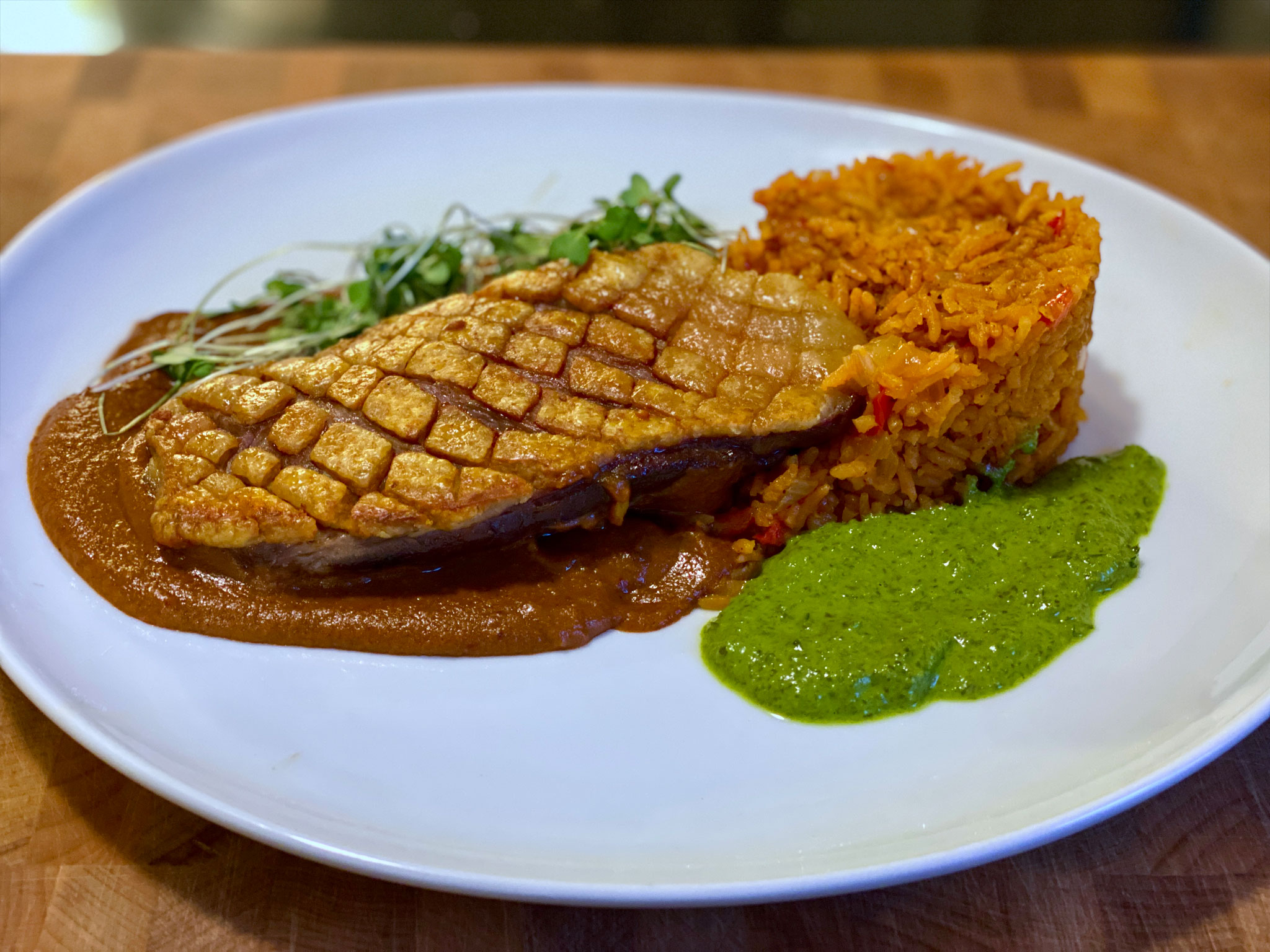
Pan-Roasted Duck Breast
Dry-brined, slow-rendered duck breast with crisp, deeply golden skin and a rosy interior — the centerpiece of my MasterChef "Holy Mole" recreation.
Servings: 2 servings
Ingredients
- 2 large duck breasts approximately 10.5 oz each
- Kosher salt for dry-brining
- Freshly ground black pepper
Instructions
Preparation
- Dry-brine: Pat the duck breasts dry. Season all over with kosher salt and place uncovered on a rack set over a tray in the refrigerator for 24 hours.
- Firm the skin for scoring: Transfer the duck breasts to the freezer for 30 minutes. They should firm up enough to make scoring easier without freezing solid.
- Score and season: Remove from the freezer. Score the skin in a crosshatch pattern, cutting through the fat without cutting into the meat. Add black pepper; go lightly with any additional salt because the duck has already been dry-brined.
- Prepare the skillet: Place the breasts skin-side down in a cold, dry 12-inch cast-iron skillet. Add cooking weights to get all of the skin touching the pan surface for even browning.
Cooking
- Set the burner to low or medium-low. Render the skin slowly, pouring off excess fat as needed.
- Begin checking the internal temperature after 8–10 minutes. Continue until the skin is deeply golden and crisp, and the duck's internal temperature is 125°F (52°C); rendering may take 15 minutes.
- Remove any heavy weight after the initial few minutes. Use only enough pressure to maintain contact if necessary.
- Check the internal temperature before flipping. Turn the breasts and cook the meat side briefly, only as needed.
- Rest skin-side up for 5–10 minutes before slicing across the grain, or leave unsliced like Jake did.
Notes
Dry-brining seasons the meat and helps dry the skin for better browning.
Briefly chilling the breasts in the freezer firms the skin and fat, making them easier to score cleanly.
Avoid automatically cooking the meat side for a full minute; check temperature first.
For food safety, USDA recommends poultry reach 165°F. Lower culinary doneness targets carry additional risk. The 125°F internal will go to 130°F while resting. This is how restaurants / professional chefs do it. If you have a compromised immune system, then cook to 165°F. It won't look as pretty, but it will still taste great and be juicy.
Total time includes the 24-hour dry-brine and 30-minute freezer chill.