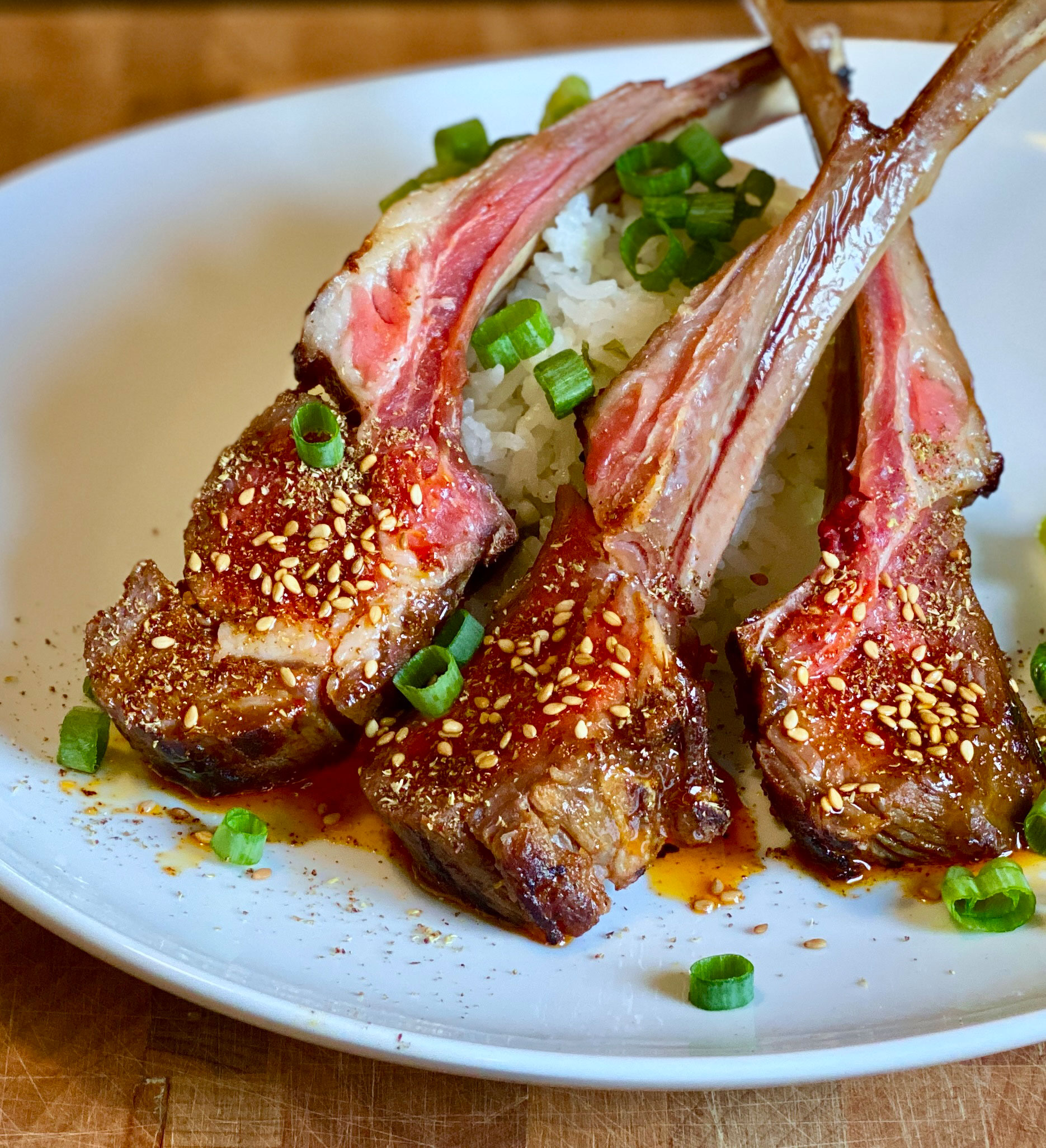
Most rack of lamb recipes fall into the same lane – rosemary, garlic, Dijon, maybe a breadcrumb crust. Do we really need another Frenched lamb rack recipe with all of the same stuff? How about something different from what everybody else is doing? I love Chinese food, so that’s where I went.
Pixian doubanjiang, the fermented chili bean paste that’s packed with flavor and spice is a perfect marinade and glaze. Sichuan peppercorns work at two layers here: ground into the paste for deep background málà integration, and freshly toasted and ground for an electric finishing hit.
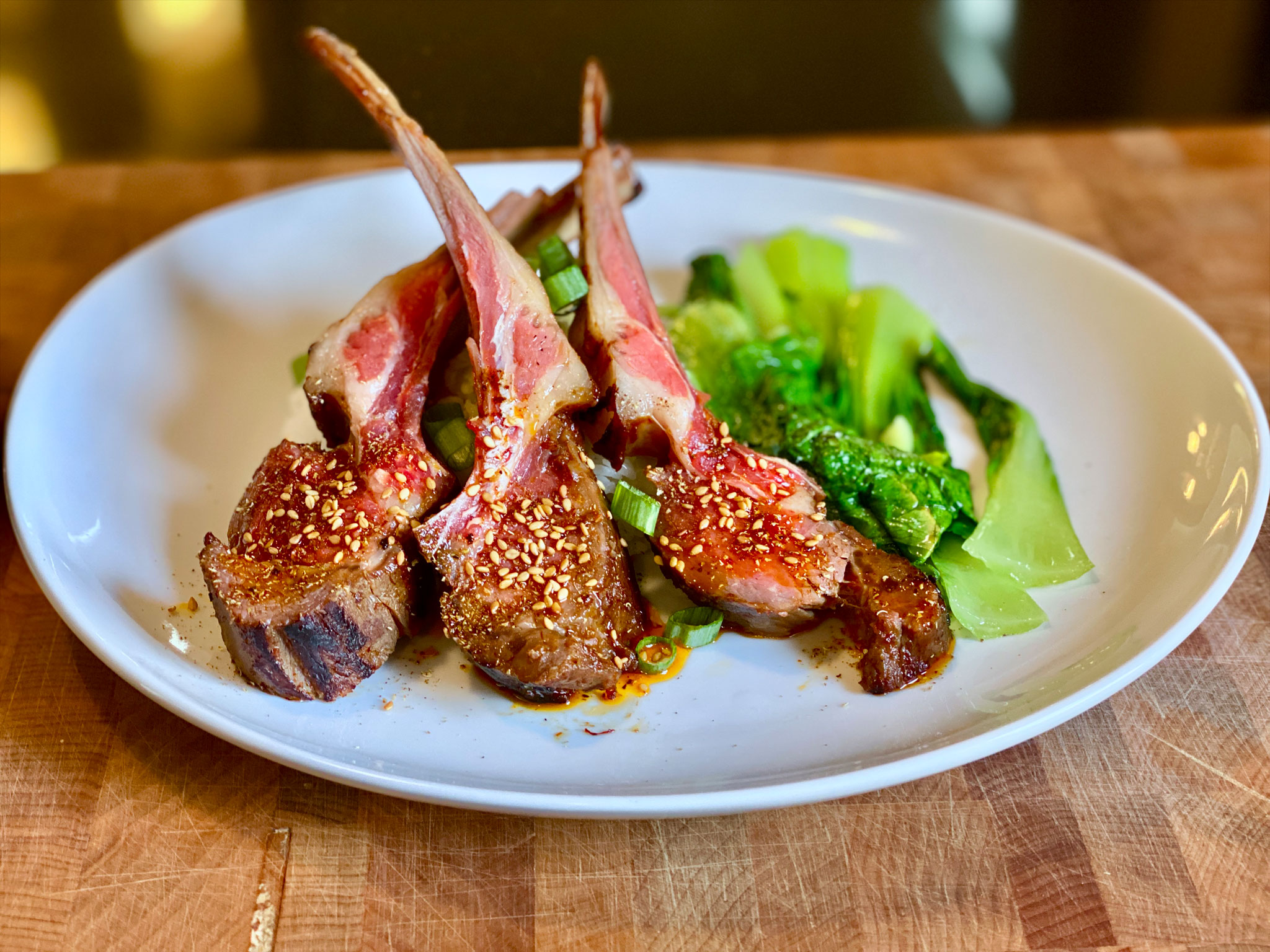
It’s a Chinese-style rack of lamb that bridges Sichuan and Xinjiang flavors. It is super delicious, and the spiciness and buzzing lips make it fun too.
Why Doubanjiang and Lamb Work Together
If you’ve cooked with Pixian doubanjiang before, you know it as the backbone of mapo tofu and twice-cooked pork. It’s deeply savory, fermented, salty, and carries a slow-building chili heat that’s nothing like the sharp burn of fresh peppers. That fermented funk is exactly what lamb’s richness can stand up to – they push against each other without either one winning.
The paste I build around the doubanjiang pulls in dark soy sauce for color and a hit of molasses-like depth, Shaoxing wine to loosen things up, honey for caramelization, and a base of grated garlic and ginger. Ground cumin goes in as a nod to Xinjiang-style lamb. Cumin and lamb is one of those combinations that just works across every cuisine that uses it, along with five-spice powder and ground Sichuan peppercorn. That last ingredient is doing double duty: ground into the paste for a deep, mellow background numbing that integrates during the marinade, and then toasted and freshly ground as a finishing hit right before serving. Two layers of the same spice playing completely different roles.
The Dry Brine
A light dry brine the night before does two things: it seasons the meat deeper than a surface rub ever could, and it pulls moisture to the surface, which then reabsorbs. So when you sear, the surface is drier and you get a harder, faster crust. The key word is light. The doubanjiang paste is already carrying a lot of sodium between the fermented bean paste itself and the dark soy sauce, so you don’t want to over-salt. I hit just the meat side with a light dusting of kosher salt, skip the fat cap entirely, and let it sit uncovered on a wire rack in the refrigerator overnight. In the morning, I make the paste, paint it on, and put the rack back in the fridge for the rest of the day.
Sear, Then Straight to the Oven
The workflow here is clean. Come dinner, pull the rack out to temper for 45 minutes, then sear it with the paste on in a hot, but not too hot, cast iron. The doubanjiang paste doesn’t burn if your pan is just at the smoking stage. It caramelizes and takes on beautiful color during the sear, creating the base of what becomes the glaze. After searing both sides, the rack goes fat-side up in the same skillet directly into a 400°F oven. That skillet holds all the fond from the sear, which becomes the foundation of the pan sauce later.
The Pan Sauce
Don’t skip this. Once the lamb rests, the cast iron goes back on the burner for a quick deglaze with Shaoxing wine and chicken stock, a small amount of doubanjiang stirred in, and a splash of Chinkiang black vinegar to brighten everything. Reduce by half and finish with cold butter swirled in for body. The vinegar is the key move — it cuts through the richness of the lamb and the paste and makes the whole plate feel alive rather than heavy. Strain it and you’ve got something that looks and tastes like it came out of a serious kitchen.
Sourcing the Sichuan Peppercorn
This is worth getting right. I’m using Hanyuan Tribute Pepper (Qingxi Gong Jiao) from The Mala Market — it’s their top-tier Sichuan peppercorn, sourced from Hanyuan county, which is considered the origin terroir for red Sichuan pepper. The “tribute” designation means it’s the grade historically reserved for the imperial court. These have a more complex, citrusy aroma alongside the numbing effect compared to standard Da Hong Pao — more floral and less harsh. When you’re using Sichuan peppercorn at two layers in a dish like this, the quality gap is noticeable, especially in that freshly toasted finishing grind where there’s nothing to hide behind.
Doubanjiang Glazed Frenched Lamb Rib Rack
Equipment
- Cast Iron Skillet
Ingredients
Lamb
- 1¾ lb Frenched lamb rib rack
- 1 tablespoon kosher salt for dry brine
- 1 tablespoon neutral oil
Doubanjiang Paste
- 2 tablespoons Pixian doubanjiang minced fine
- 1 tablespoon Shaoxing wine
- 1 tablespoon dark soy sauce
- 2 teaspoons toasted sesame oil
- 1 tablespoon honey
- 3 garlic cloves grated
- 1 tablespoon fresh ginger grated
- 1 teaspoon ground cumin
- ½ teaspoon five-spice powder
- ½ teaspoon ground Sichuan peppercorn
Pan Sauce
- 2 tablespoons Shaoxing wine
- ¼ cup chicken stock
- 1 teaspoon Pixian doubanjiang
- 1 teaspoon Chinkiang black vinegar
- 1 tablespoon cold unsalted butter
Finishing
- 1 teaspoon whole Sichuan peppercorns for finishing
- 2 scallions greens thinly sliced
- 1 teaspoon toasted sesame seeds
Instructions
- Night before: Pat the lamb rack completely dry with paper towels. Score the fat cap in a shallow crosshatch pattern — cut just through the fat, not into the meat. Season the meat side only with the kosher salt, avoiding the fat cap. Place on a wire rack set over a sheet pan, uncovered, in the refrigerator overnight.
- Morning: Combine the doubanjiang, Shaoxing wine, dark soy sauce, toasted sesame oil, honey, garlic, ginger, cumin, five-spice powder, and ground Sichuan peppercorn in a bowl. Mix into a thick, paintable paste.
- Paint the paste generously over the rack's meat side and fat cap, pressing it into the score marks. Wrap exposed bone tips in foil. Return to the wire rack set over a sheet pan, uncovered, in the refrigerator for the rest of the day.
- Evening: Remove the rack from the refrigerator 45 minutes before cooking to take the chill off. Preheat oven to 400°F.
- Heat the neutral oil in a cast iron skillet over high heat until smoking. Place the rack fat-side down with the paste on and sear until the fat renders and the paste takes on color, about 2 minutes. Flip and sear the meat side for about 1 minute.
- With the rack fat-side up in the skillet, transfer directly to the 400°F oven. Roast until internal temperature reaches 130°F for medium-rare, roughly 15-20 minutes.
- Transfer the rack to a cutting board and tent loosely with foil. Rest for 10 minutes. Carryover will bring it to about 135°F.
- While the rack rests, toast the whole Sichuan peppercorns in a small dry skillet over medium-low heat, shaking frequently, until fragrant and slightly darkened. Transfer to a mortar or spice grinder and grind fine.
- Set the cast iron skillet over medium heat. Deglaze with the Shaoxing wine, scraping up the fond. Add the chicken stock and bring to a simmer. Stir in the doubanjiang and Chinkiang black vinegar. Reduce by about half, then remove from heat and swirl in the cold butter until emulsified. Strain through a fine mesh strainer.
- Slice the rack into individual or double chops. Spoon the pan sauce over or alongside. Finish with the sliced scallion greens, toasted sesame seeds, and a pinch of the freshly ground Sichuan peppercorn.
Notes
The Sides: Keeping It Restrained
I designed both sides to support this lamb without competing with it. The doubanjiang glaze, the pan sauce, the Sichuan peppercorn is a lot happening on the main plate already. What you need alongside it is something aromatic but not rich, and something bright with crunch.
Scallion-Ginger Jasmine Rice
This is jasmine rice tossed with an infused oil made from ginger slices and scallion whites cooked gently in neutral oil. It’s aromatic without being heavy, and it soaks up the pan sauce beautifully. You can also make this hands-off in a rice cooker by laying the ginger slices and scallion whites right on top of the rice and water before starting it – the steam infuses everything as it cooks. The result is a little more subtle than the stovetop oil method, but it works and frees up a burner on a busy cook night.
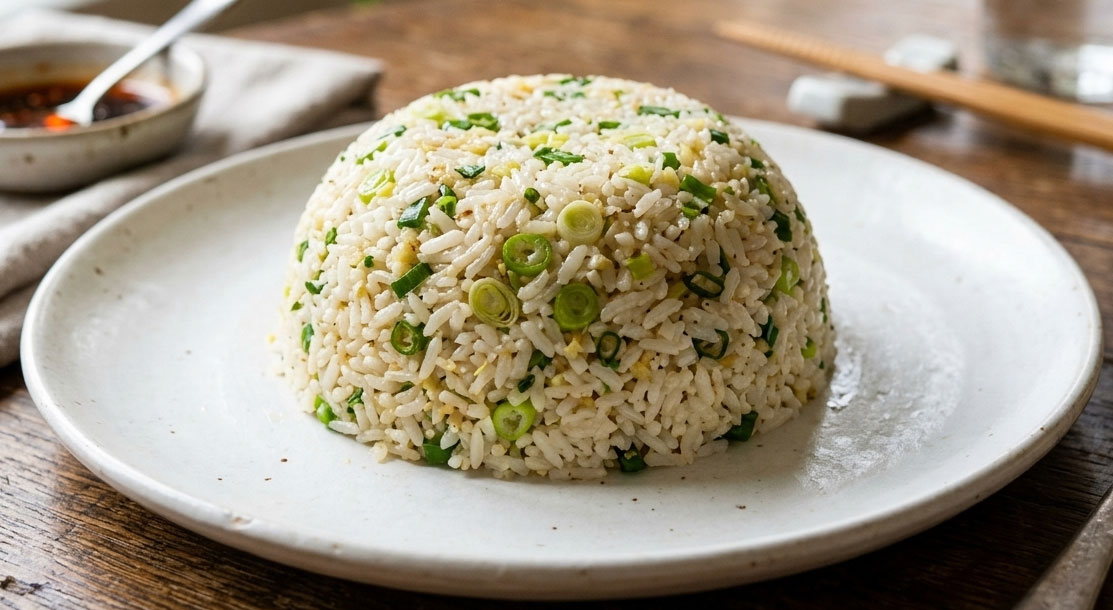
Scallion-Ginger Jasmine Rice
Ingredients
- 1 cup jasmine rice
- 1 1/4 cups water
- 2 tablespoons neutral oil
- 1 tablespoon fresh ginger peeled and thinly sliced
- 3 scallion whites thinly sliced
- 1/4 teaspoon kosher salt
Instructions
- Rinse the jasmine rice in several changes of cold water until the water runs mostly clear. Drain well.
- Combine the rinsed rice and water in a small saucepan. Bring to a boil, stir once, cover tightly, and reduce heat to the lowest setting. Cook undisturbed for 15 minutes, then remove from heat and let steam with the lid on for 10 minutes.
- While the rice steams, heat the neutral oil in a small skillet over medium-low heat. Add the ginger slices and scallion whites. Cook gently, stirring occasionally, until the ginger is golden and the scallion whites are softened and fragrant, about 3-4 minutes. Don't let them brown. Remove from heat.
- Fluff the rice with a fork. Strain the infused oil over the rice, discarding the solids (or leave them in if you like the texture). Add the kosher salt and toss gently to distribute.
Notes
Wok-Charred Garlic Baby Bok Choy
This is a three-minute wok job that you fire while the lamb rests. Baby bok choy halved and seared cut-side down for a light char, hit with sliced garlic and a splash of Shaoxing wine around the edge of the wok. Finished with a drizzle of sesame oil and white pepper.
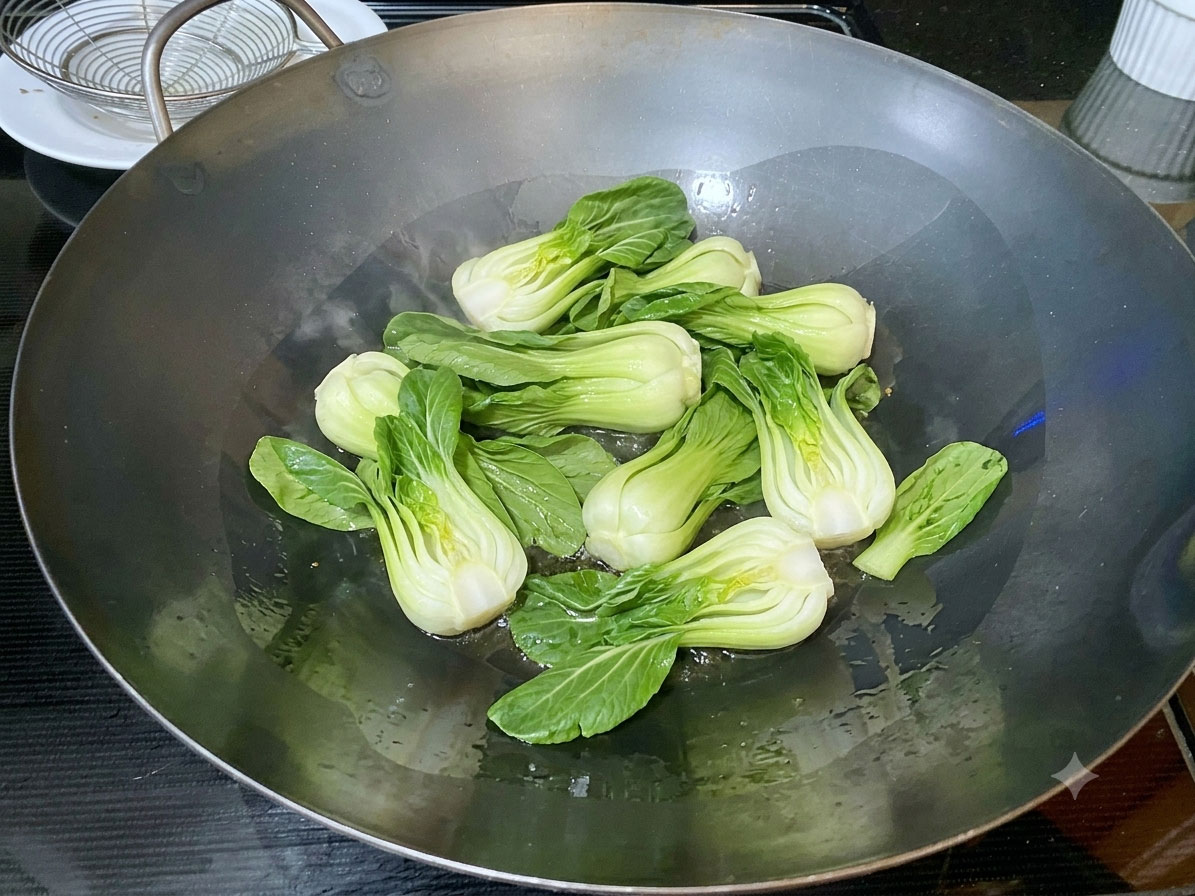
Wok-Charred Garlic Baby Bok Choy
Ingredients
- 4 heads baby bok choy halved lengthwise
- 1 tablespoon neutral oil
- 3 garlic cloves thinly sliced
- 1 tablespoon Shaoxing wine
- 1/2 teaspoon toasted sesame oil
- 1 pinch white pepper
Instructions
- Wash the baby bok choy thoroughly, getting into the base where dirt collects. Shake dry or pat with towels — excess water will spatter in the hot wok.
- Heat a wok or large skillet over high heat until smoking. Add the neutral oil and swirl to coat. Lay the bok choy cut-side down in a single layer and sear without moving for about 45 seconds until lightly charred.
- Flip the bok choy and push to the sides of the wok. Add the garlic slices to the center and let sizzle for about 15 seconds until fragrant but not browned.
- Add the Shaoxing wine around the edge of the wok — it will flash off immediately. Toss everything together and cook for another 30-45 seconds until the stems are tender-crisp and the leaves are just wilted.
- Remove from heat. Drizzle with the toasted sesame oil and finish with the white pepper. Plate immediately.
Notes
Cook Day Timeline
The night before, salt the meat side of the rack and refrigerate uncovered on a wire rack. In the morning, make the paste, apply it, and return the rack to the fridge. That’s about 10 minutes of active work.
About an hour before dinner: pull the rack out to temper (45 minutes). Preheat the oven to 400°F. Start the rice — whether stovetop or rice cooker, get it going now.
Sear the rack with the paste on, then straight into the oven. Roast until it hits 130°F internal, roughly 15-20 minutes. Pull and tent with foil to rest for 10 minutes — carryover will bring it to about 135°F for medium-rare.
While the lamb rests: toast and grind the finishing Sichuan peppercorns, fire the bok choy in a hot wok (3 minutes), and build the pan sauce (another 3 minutes). Everything converges at the same moment.

Leave a Reply