
How This Wasabi Ceviche Recipe Came Together
In June 2025, Lori and I spent a week and a half in the Brickell neighborhood of Miami. Lori had some elective surgery with a specialist in the area and a follow up the next week, so we stayed for both. That’s a whole other story though. Our friend Louie who is a restaurant consultant was working down there so we asked him for some restaurant recommendations.
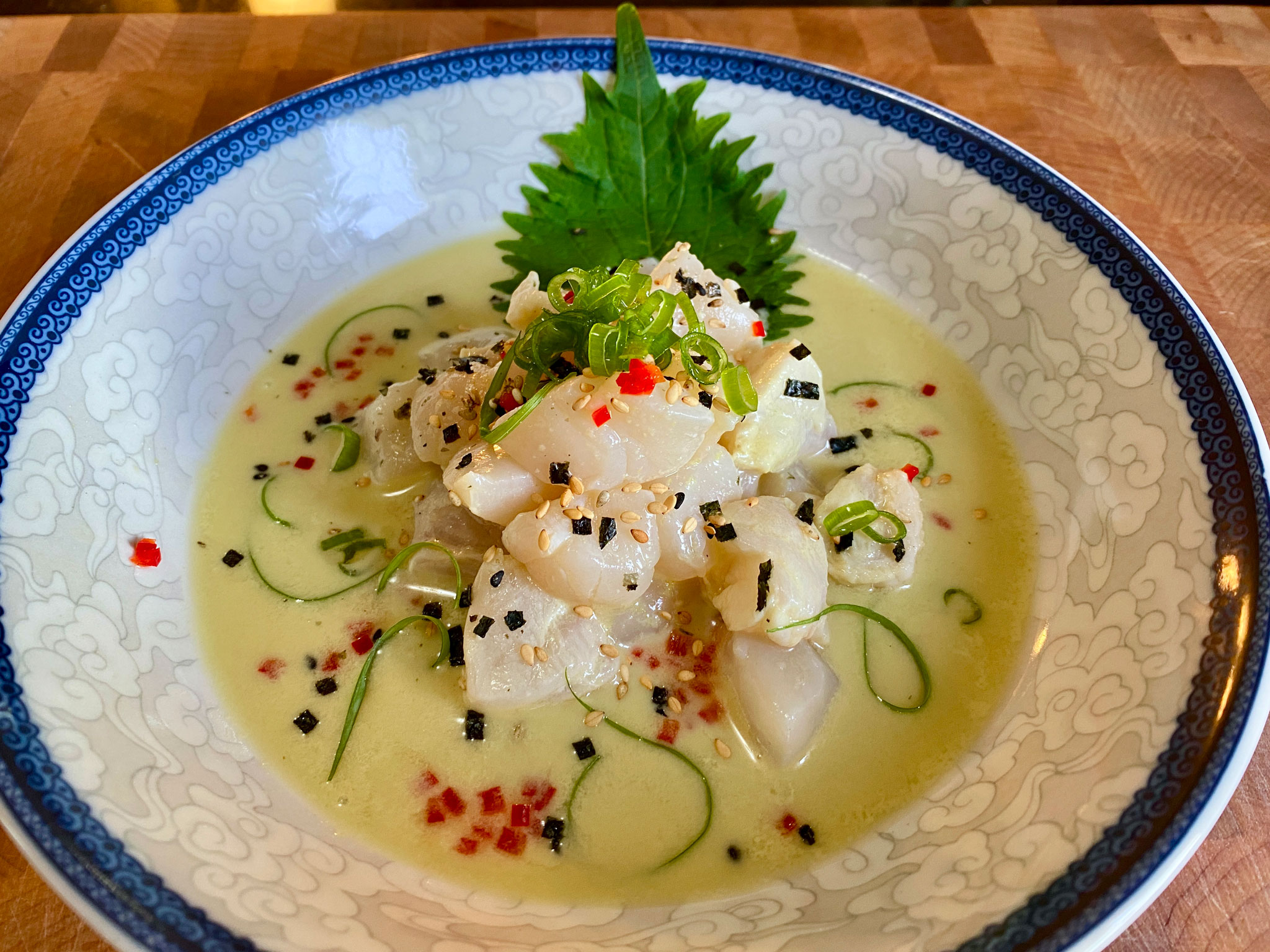
His first suggestion was Osaka, which was a two block walk from our condo rental. It was so good that we went twice. Our favorite dish there is the Wasabi Ceviche. When I first had it, I said, “I could eat a gallon of this! The wasabi kick was right to the line – the perfect amount, and the lime and super fresh scallops and white fish made this an addicting delight.”
Bringing Osaka’s Wasabi Ceviche Home
At the same time we decided to take a trip to Peru in October 2025. Osaka specializes in Nikkei cuisine, which in short is a fusion of Japanese and Peruvian cuisines that came about from Japanese migration to Peru decades ago. I knew nothing about Peruvian cuisine. I found that Scoolinary.com has several culinary courses on Peruvian cuisine that are video lessons taught by actual professional restaurant chefs. I signed up and took a deep dive as I wanted to understand the food for both trips – Miami and Peru. The original Osaka location is actually in Lima, Peru. We went to both.
The Scoolinary site also has interactive forums. After taking the ceviche lessons, I asked for help in the forums on reverse engineering Osaka’s recipe, and one of the Peruvian chefs helped me come up with this recipe, and to my delight it is nearly the same as the restaurant dish.
To make this, I ordered sushi/sashimi grade Hokkaido scallops and Red Snapper from Browne Trading Co. in Maine.
What “Sushi Grade” Actually Means (and Doesn’t)
“Sushi grade” and “sashimi grade” get thrown around like they’re an official stamp of approval — they aren’t. There’s no USDA or FDA certification behind the term. No government inspector signs off on a fish and declares it “sushi grade.” It’s a designation the seafood merchant applies themselves, based on their own standards for freshness, handling, and sourcing.
The one place federal regulation does enter the picture is around parasite risk. The FDA has freezing guidelines — commonly citing something like freezing at -4°F for 7 days, or -31°F until solid followed by storage at -31°F for 15 hours — designed to kill parasites in fish destined to be eaten raw. But even that isn’t a blanket rule; some species (certain tuna, most farmed salmon) are considered low-risk enough to be exempt.
In other words: “sushi grade” tells you the seller believes the fish is safe to eat raw at the moment you bought it. It says nothing about what happens after that. The responsibility shifts to you the second it’s in your hands. I bring a cooler packed with ice every single time I pick up fish from a trusted seafood counter — whether I plan to eat it raw or cook it — because keeping the cold chain unbroken is what actually keeps you safe, not the label on the package.
There’s a lot more nuance to sourcing raw-grade seafood responsibly, but that’s a deep dive for another post.
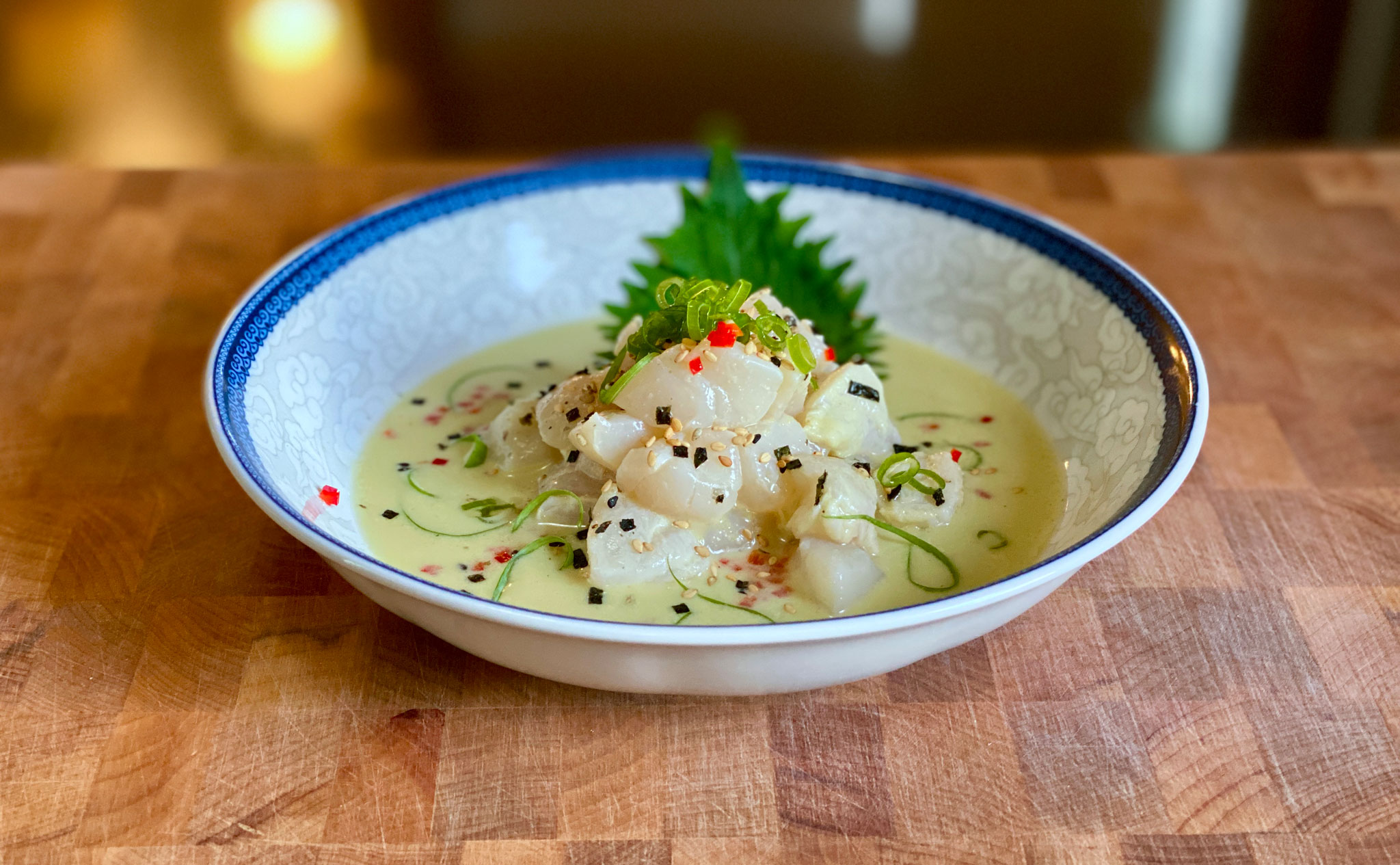
Wasabi Ceviche with Hokkaido Scallops, White Fish & Furikake
Equipment
- Blender
Ingredients
For the fish and seafood
- 120 g fresh white fish like corvina, snapper, or flounder, cut into large dice
- 4 fresh Hokkaido scallops cut into large dice (halved or quartered)
- Shiso leaves optional, for garnish
- Scallions green parts only - thinly sliced crosswise, tossed in sesame oil (for garnish)
- Scallions green parts only - cut into 2 inch thin strips, curled in ice water (for the leche de tigre)
- Fresno chile finely diced
For the wasabi leche de tigre
- 80 ml fresh limon sutil juice or the most aromatic, non-bitter lime you can find
- Kombu one stamp-size piece
- 1 tbsp cold fish stock or iced water
- 1/2 tsp white miso
- 1/2 garlic clove minced
- 1 slice fresh ginger
- 1/2 aji limo or chili pepper of choice, deseeded. jalapeño works well here.
- 1 tsp wasabi paste or more, to taste
- 1/2 tsp clear soy sauce
- 1 tsp toasted sesame oil
- Salt to taste
- 1 tsp sugar optional, to balance acidity if needed
To finish
- Furikake Nori Komi, Ajishima Foods, to taste
- Toasted white sesame seeds
- Lime zest optional
- Microgreens or sprouts optional
Instructions
- Make the leche de tigre: Steep the stamp-size piece of kombu in the lime juice for 10 minutes (cold steep).
- In a blender, combine all leche de tigre ingredients except the sugar. Blend on high for a few seconds, then strain through a fine sieve so the liquid stays clear. Adjust seasoning so it's bright, balanced, and aromatic with a clean wasabi note. Add a pinch of sugar if it tastes overly acidic.
- Assemble the ceviche: In a shallow bowl, arrange the diced fish and scallops. Pour the cold, strained leche de tigre over them.
- Garnish: Sprinkle with furikake, diced Fresno chile, and the thinly sliced scallion greens tossed in sesame oil. Top with the curled scallion strips, shiso leaves, and microgreens if using. Finish with lime zest if desired.
Notes
Adjust the wasabi intensity to your taste.
If you can't find limon sutil, substitute with the most fragrant, non-bitter lime available.
The light soy sauce and sesame oil are what give this dish its distinct Nikkei character.
Filter the leche de tigre well so it stays clear.
Fun fact: in Peru, ceviche is traditionally eaten at lunch, since the fish is bought fresh that morning and leche de tigre is considered too acidic and heavy for dinner - though modern Nikkei kitchens are starting to bend that rule.

Leave a Reply