
The Corn That Started It All
This dish was born because of purple and white corn. I always love using ingredients that seem out of the ordinary. After traveling to Peru and Mexico recently and finding that they have hundreds of varieties of corn in all different colors, I was annoyed that in the U.S. we only have yellow and sometimes white, or yellow and white.
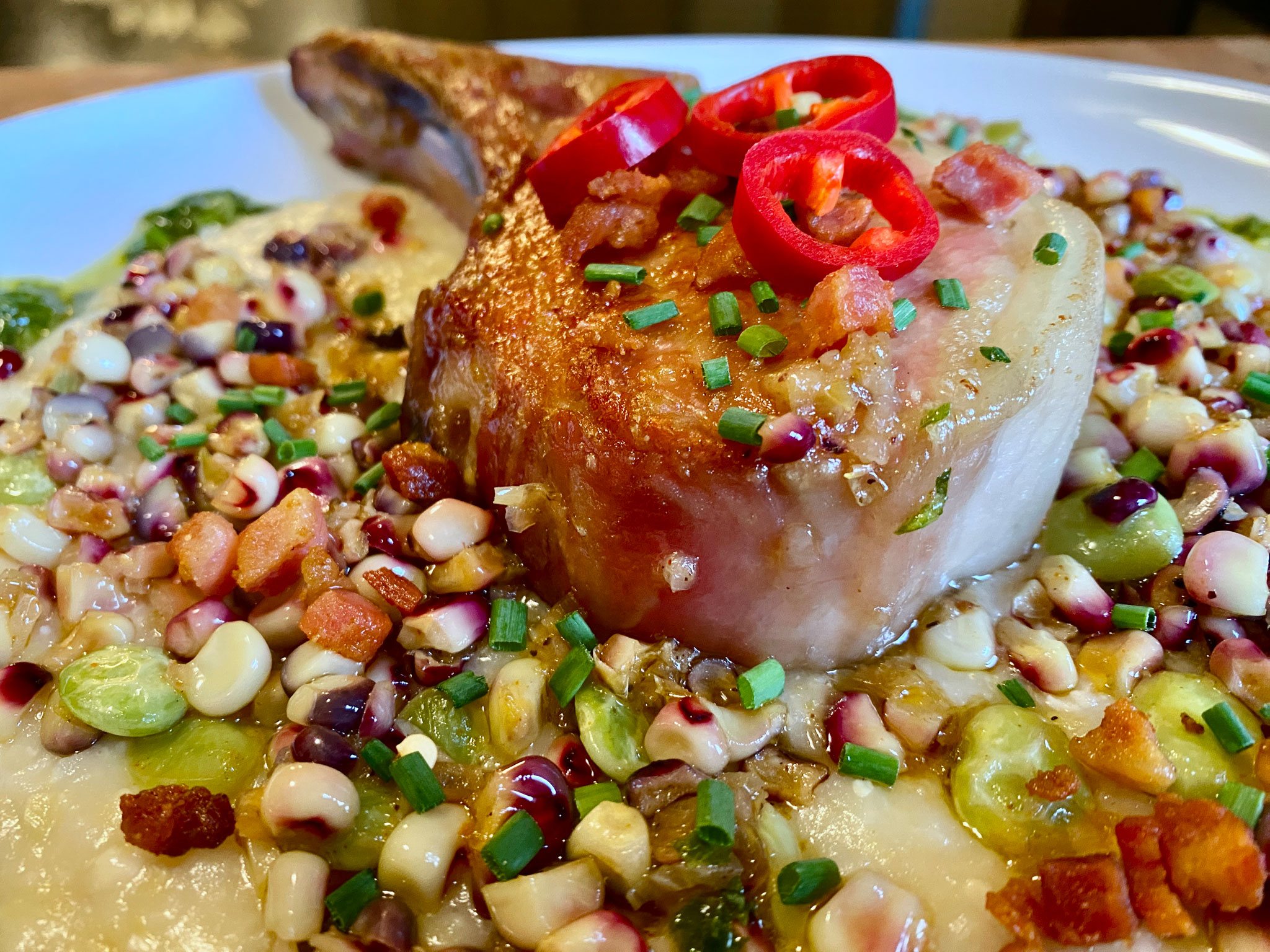
So when I stumbled across a small offering of purple and white corn at my local Sprouts Farmers Market, it felt less like shopping and more like stumbling onto contraband — corn in colors our own agricultural system spent a century breeding out of existence. I built the Scarlet & Amethyst Reverse-Seared Pork Chop around that find: yellow corn grits as the base, a Sweet Scarlet corn succotash alongside, pancetta and Fresno chile to cut through the sweetness, and a chive-parsley chimichurri to pull it all together.
That annoyance stuck with me while I was cooking. In Peru, purple and white corn isn’t a novelty — market stalls there sell corn in purple, black, red, pink, and blue as a matter of course, dozens or hundreds of distinct varieties, each adapted over generations to a specific valley or altitude. Mexico is the same story, corn’s actual birthplace, still home to thousands of native landraces. What I had stumbled upon at Sprouts as a special find, a home cook in the Andes would just call “corn”.
That’s not a coincidence. It’s the direct result of what U.S. industrial agriculture decided corn should be. Sometime around the late 1800s, American seed breeding locked in on yield, mechanization, and processing value, and consolidated around a shrinking handful of hybrid lines that delivered those three things. Yellow dent corn won because it made good feed and good starch. White corn held on for masa. Everything else – the varieties bred for color, for flavor, for anything other than bushels per acre — got dropped from the commercial gene pool, not because it failed, but because Big AG was never selecting for it in the first place.
So when I plate this dish, I’m not just chasing a striking color contrast for the photo (though I’ll take it). The purple corn that started it all is right there in the succotash — a reminder of the diversity our own food system quietly bred away, and that other countries never gave up.
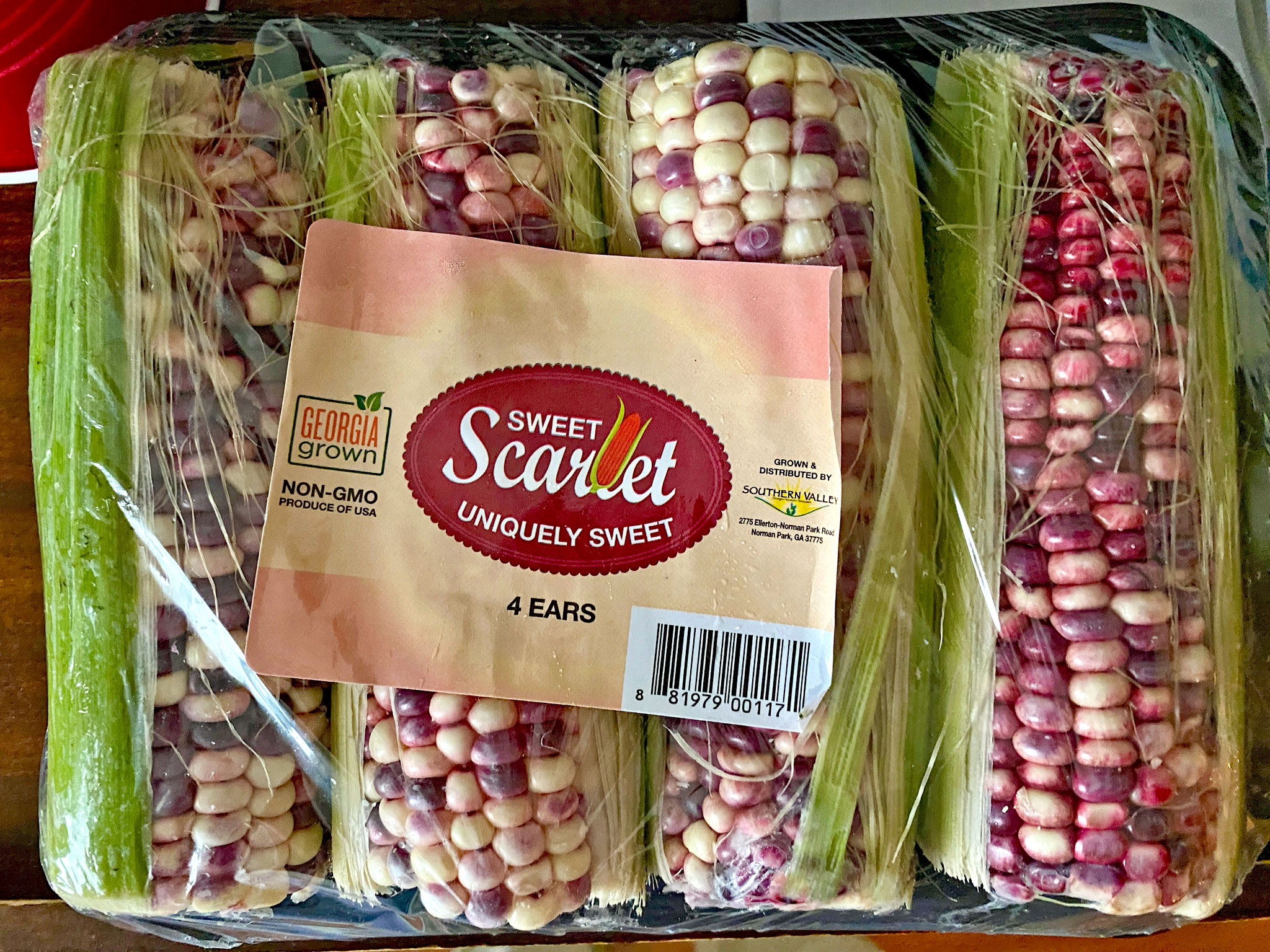
That corn, it turns out, came from Southern Valley, a women-owned, family-operated farm based in Norman Park, Georgia, that’s been growing sweet corn and other produce across Georgia, Florida, Tennessee, and Mexico’s Yucatan Peninsula for nearly four decades — proof that a little corn diversity is still out there in American agriculture, if you know where to look.
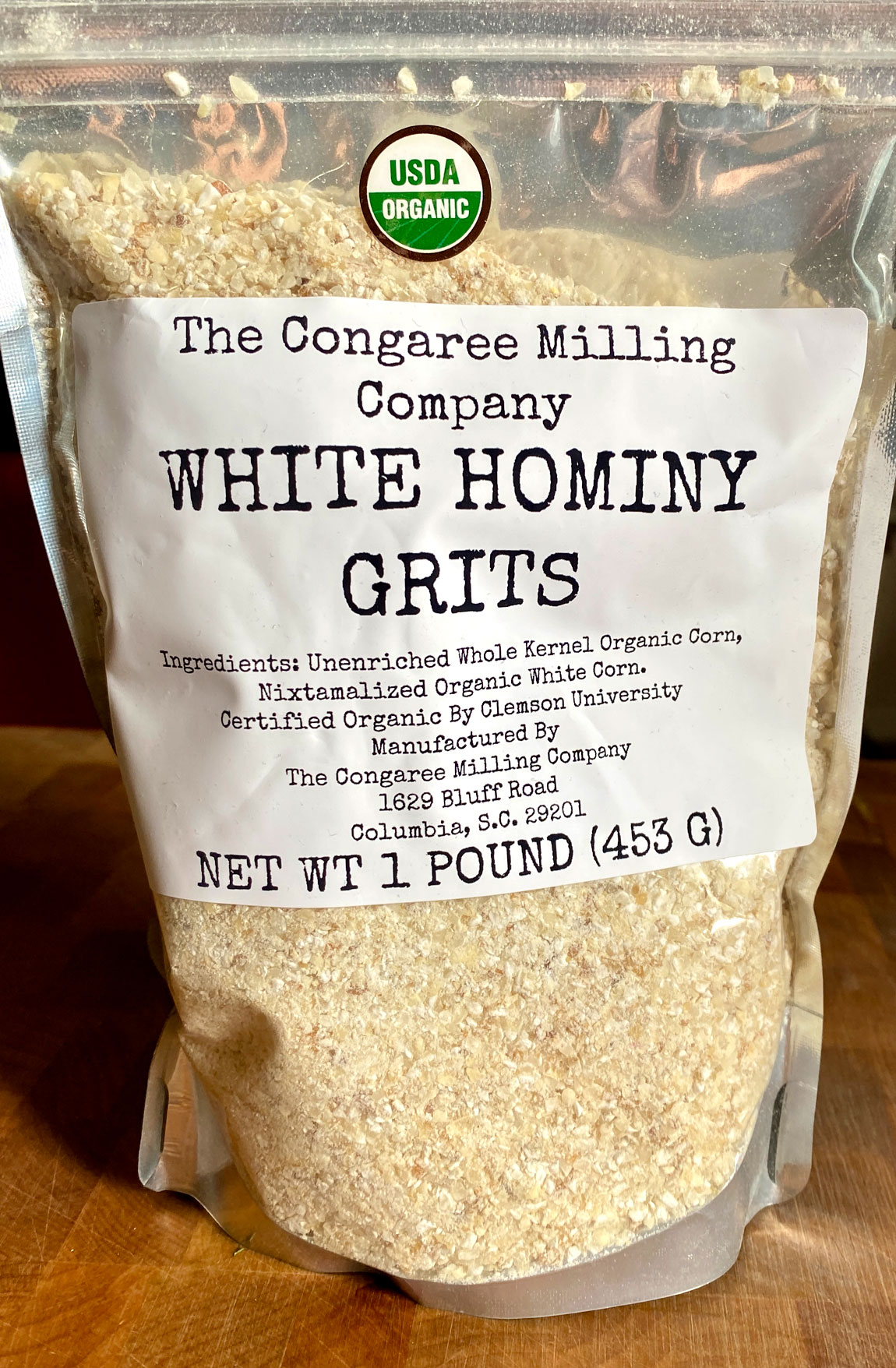
The Congaree Milling Company‘s grits have been the only grits I will ever buy for several years now. I have no affiliation with them, and do not earn a commission when you buy from them.
They are a small artisan grits maker based in Columbia, SC. There are no better grits in my opinion. I love the coarse grind that I can’t find anywhere else. It has a much more interesting mouthfeel and chew. Mass-market, grocery store grits are almost always a fine grind, which is boring and reminds me of Farina / baby food.
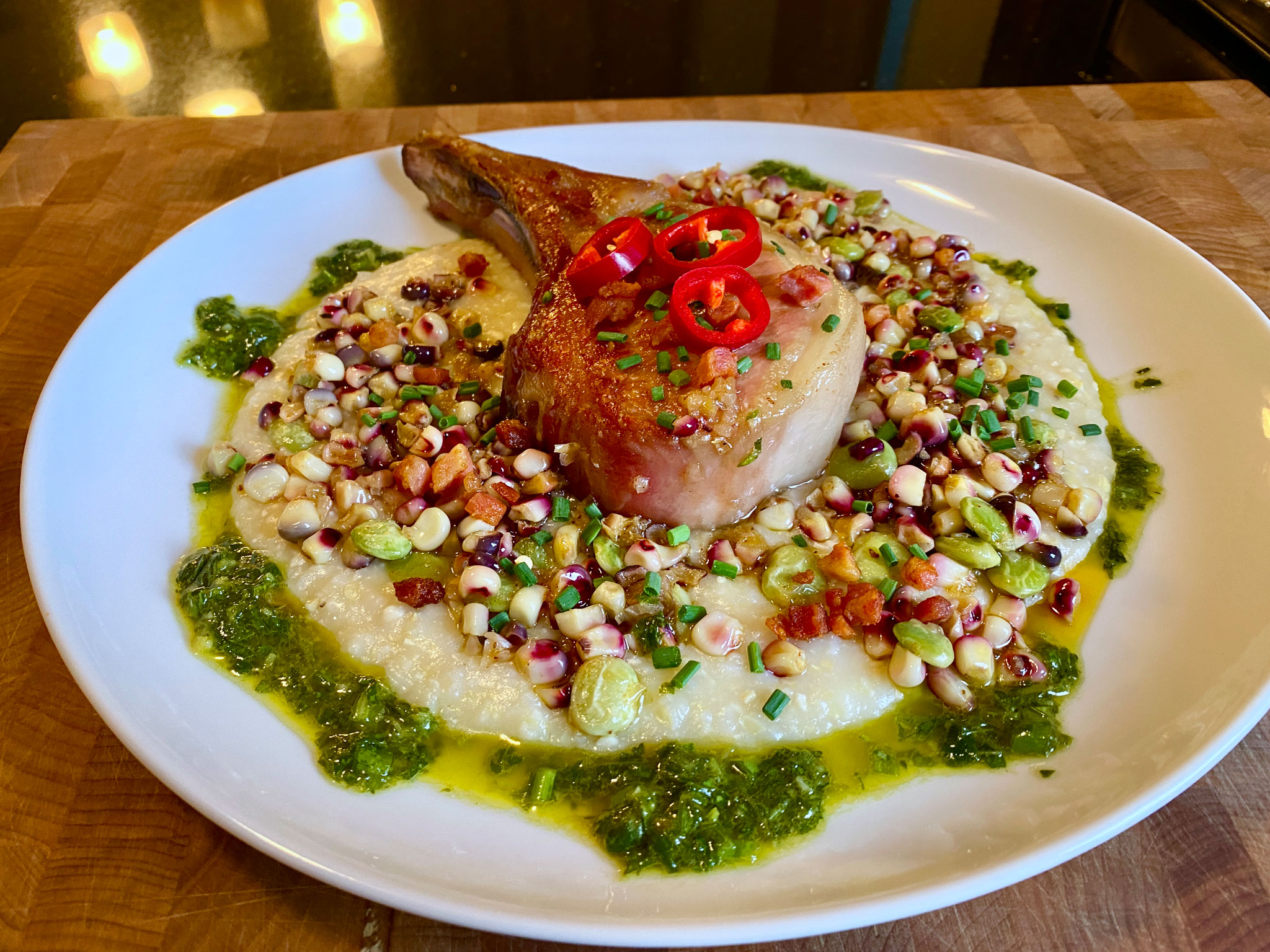
Reverse-Seared Pork Chop Over Grits with Purple & White Corn Succotash
Ingredients
Pork Chops
- 4 bone-in pork chops 1.5" thick
- 1-2 tablespoon kosher salt for dry brine
- 1 teaspoon black pepper freshly cracked
- 6 ounces pancetta diced small
Yellow Corn Grits
- 1 cup stone-ground yellow corn grits
- 4 cups water or light chicken stock
- 3 tablespoons unsalted butter
- ¾ cup aged gouda or Manchego grated
- 1 teaspoon salt
Brown-Butter Corn Succotash
- 4 tablespoons unsalted butter
- 1 shallot finely diced
- 3 cups Sweet Scarlet corn kernels cut raw off the cob
- 1 cup lima beans blanched
- ½ teaspoon salt
Chimichurri
- 1 cup flat-leaf parsley leaves packed
- ⅓ cup fresh chives roughly chopped
- 1 garlic clove
- 2 tablespoons red wine vinegar
- 1 tablespoon fresh lime juice
- ½ cup extra virgin olive oil
- ½ teaspoon crushed red pepper flakes
- ½ teaspoon salt
For Serving
- 1 Fresno chile thinly sliced into rings
- ½ cup chives chopped, for garnish
Instructions
- Dry brine the chops: Season the pork chops all over with the kosher salt and black pepper. Set uncovered on a rack in the fridge for at least 45 minutes, ideally overnight. Bring to room temp about 30 minutes before cooking.
- Make the chimichurri: Finely chop the parsley, chives, and garlic together (or pulse briefly in a food processor - don't puree). Transfer to a bowl and stir in the red wine vinegar, lime juice, olive oil, red pepper flakes, and salt. Taste and adjust acid and salt; it should taste bright and slightly sharp.
- Render the pancetta: In a cold cast-iron skillet, add the pancetta and cook over medium-low heat, stirring occasionally, until crisp and the fat has rendered, about 8-10 minutes. Remove pancetta with a slotted spoon to a paper-towel-lined plate; reserve the rendered fat in the pan.
- Reverse sear the pork: Preheat oven to 250°F. Place the brined chops on a rack over a sheet pan and cook until an instant-read thermometer reads 115-118°F in the center, about 25-35 minutes depending on thickness. Rest 5 minutes, then sear hard in the reserved pancetta fat over high heat, about 90 seconds per side plus the fat cap, until deeply browned and internal temp reaches 140-145°F. Rest 5 minutes before plating.
- Cook the grits: Bring the water or stock to a boil, whisk in the grits, reduce to a low simmer, and cook, stirring often, 20-25 minutes until creamy. Stir in the butter, and grated Manchego until melted and smooth. Season with salt. Keep warm, adding a splash of water if they tighten up.
- Brown-butter the corn succotash: In a skillet, melt the butter over medium heat and cook until it foams, then turns nutty and golden brown, about 3-4 minutes. Add the shallot and cook 1 minute, then add the corn kernels and lima beans. Cook, stirring, 4-5 minutes until the corn is just tender with a slight bite. Season with salt and stir in a spoonful of the reserved pancetta fat.
- Plate: Spoon the warm grits onto each plate in a circle. Set the seared pork chop on top. Spoon the brown-butter succotash around the grits. Scatter the crispy pancetta and Fresno chile rings over the chop. Spoon the corn chimichurri generously around the plate. Finish with the chopped chives.
Notes

Leave a Reply