
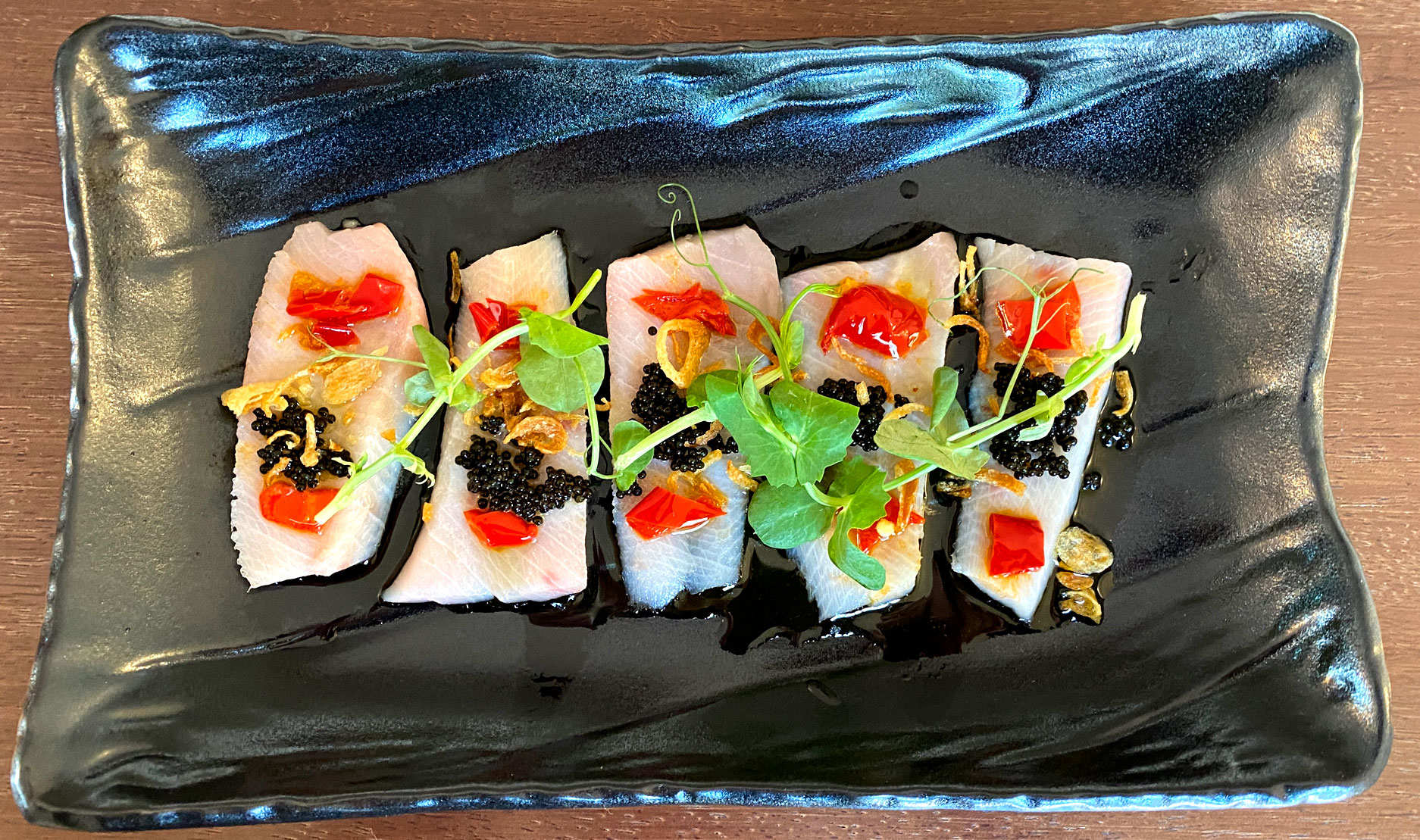
I’ve been getting into making Japanese cuisine lately, especially sushi and sashimi. Hamachi Crudo isn’t exactly sashimi, but it is similar in that it is raw fish sliced thin. That’s about where it ends for sashimi, except for some soy sauce maybe. “Crudo” means raw whether it’s for Japanese, Italian, American, or Spanish food. A hamachi crudo is usually topped with olive oil and citrus amongst other ingredients, which makes it different than sashimi.
You Might Also Like
- Authentic Wasabi Ceviche based on the dish at Osaka Miami
- Recipe: Crispy Skin Wild Black Bass with Beurre Blanc
I’ve actually had Hamachi Crudo in more Italian restaurants than Japanese, so which is it? It is actually both, and this recipe has ingredients from both cultures. The Yuzo is undeniably Japanese, and the Calabrian chiles are unquestionably Italian. The rest could go either way.
Is Hamachi a Tuna? Short answer: No. Hamachi is its own fish species, otherwise known as Jackfish, or Japanese amberjack or yellowtail. People get YellowTAIL confused with YellowFIN. Yellowfin IS a type of tuna. Yellowtail is not.
Can You Eat Hamachi Raw? Is Crudo Served Cold? Yes, and yes. Not ice cold, but not too much warmer than 40°F. I’ve long wondered why I could eat sushi or sashimi raw, but I couldn’t just go to the store and buy any fish and eat it raw.
Almost all fish have parasites – some farmed salmon and some wild tuna do not. To diffuse the bad health ramifications of fish parasites, you either need to cook them to 145°F, or freeze them to -40°C for 24-hours, or -20°C for 48-hours.
This is obviously much cooler than your home refrigerator goes. When you buy “sushi-grade” fish, it means that it has been frozen for the temperature and time previously mentioned. One of the parasites gets killed and another just goes dormant. If and when it gets above 40°F, the little buggers start to wake up. So, keep your raw sushi-grade fish cold.
I thought twice about mentioning parasites in a recipe blog post, but hey, you CAN handle the truth, and it’s good to know a little about food safety when dealing with raw items.
Update: September 2026 –
What “Sushi Grade” Actually Means (and Doesn’t)
“Sushi grade” and “sashimi grade” get thrown around like they’re an official stamp of approval — they aren’t. There’s no USDA or FDA certification behind the term. No government inspector signs off on a fish and declares it “sushi grade.” It’s a designation the seafood merchant applies themselves, based on their own standards for freshness, handling, and sourcing.
The one place federal regulation does enter the picture is around parasite risk. The FDA has freezing guidelines — commonly citing something like freezing at -4°F for 7 days, or -31°F until solid followed by storage at -31°F for 15 hours — designed to kill parasites in fish destined to be eaten raw. But even that isn’t a blanket rule; some species (certain tuna, most farmed salmon) are considered low-risk enough to be exempt.
In other words: “sushi grade” tells you the seller believes the fish is safe to eat raw at the moment you bought it. It says nothing about what happens after that. The responsibility shifts to you the second it’s in your hands. I bring a cooler packed with ice every single time I pick up fish from a trusted seafood counter — whether I plan to eat it raw or cook it — because keeping the cold chain unbroken is what actually keeps you safe, not the label on the package.
There’s a lot more nuance to sourcing raw-grade seafood responsibly, but that’s a deep dive for another post.
You will want to start with a Hamachi Saku. Saku means “block” in Japanese. If you buy a fillet, then you will have to trim it into a saku, or you can buy an already formed saku online.
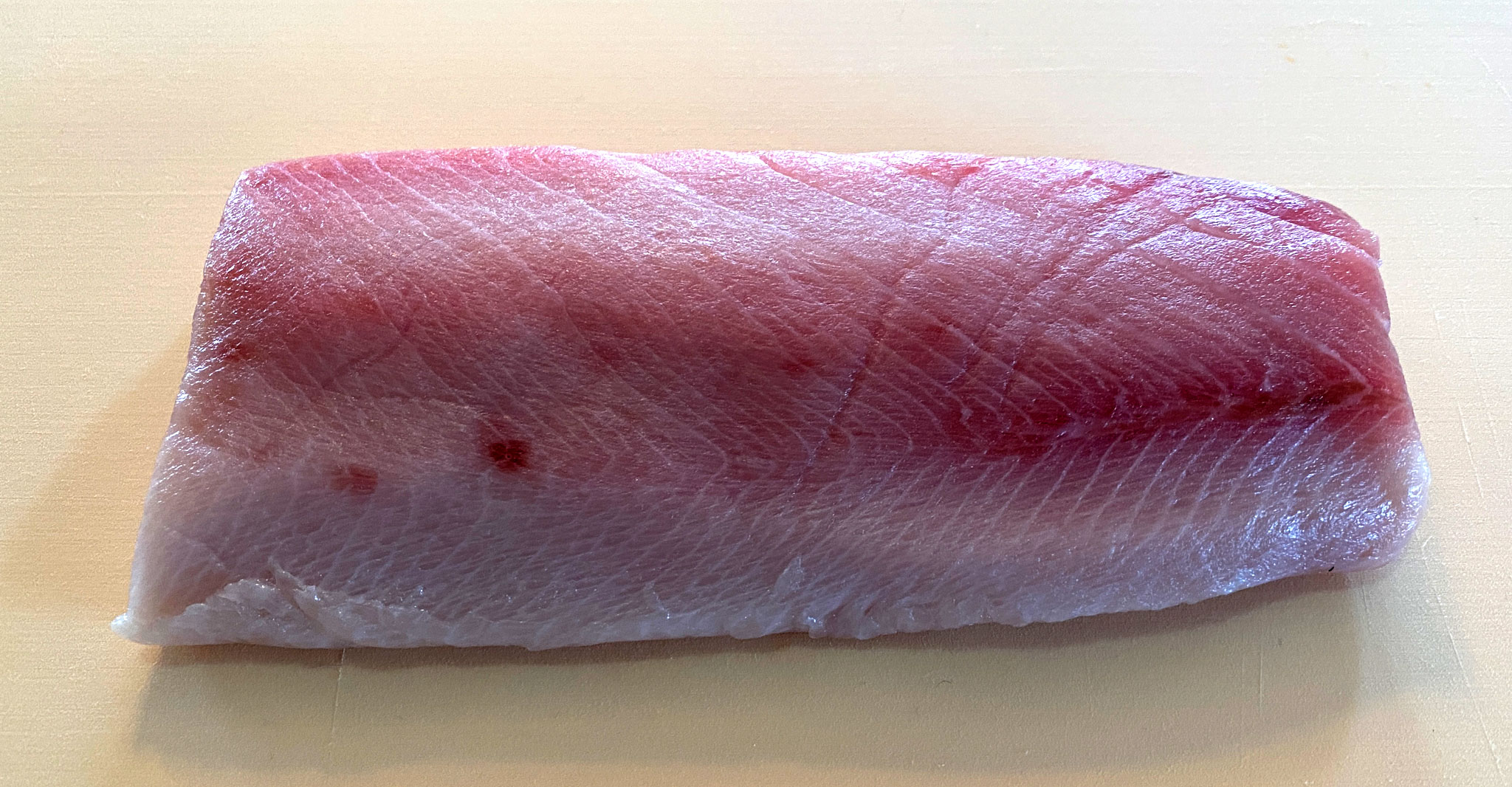
You want to slice on a 90° angle against the grain. Notice the grain is running diagonal in the above photo, so we will cut diagonal in the opposite direction. See the video below.
Hamachi Crudo with Yuzu Hot Sauce, Caviar, & Calabrian Chiles
Equipment
- 1 Yanagiba Sushi Knife or very sharp slicing knife or chef's knife, preferably single bevel, but a sharp double bevel will work.
Ingredients
- 5 slices Hamachi thinly sliced
- 3 tsp Extra virgin olive oil divided
- Yuzu hot sauce as needed for drizzling
- 1¼ tsp black caviar
- 3 oz Calabrian Chili Peppers jarred, sliced
- 1 tbsp crispy shallots for garnish
- 1-2 pea shoots for garnish
Instructions
- Drizzle 2 tsp olive oil on plate in a horizontal line.
- Thinly slice hamachi, and place along the line of drizzled olive oil.
- Drizzle Yuzu hot sauce on top of hamachi.
- Spoon caviar (with a mother-of-pearl spoon) onto each piece of fish.
- Add the Calabrian chiles, then crispy shallots, then pea shoots.
- Serve and eat immediately.
Video